


Cart
0
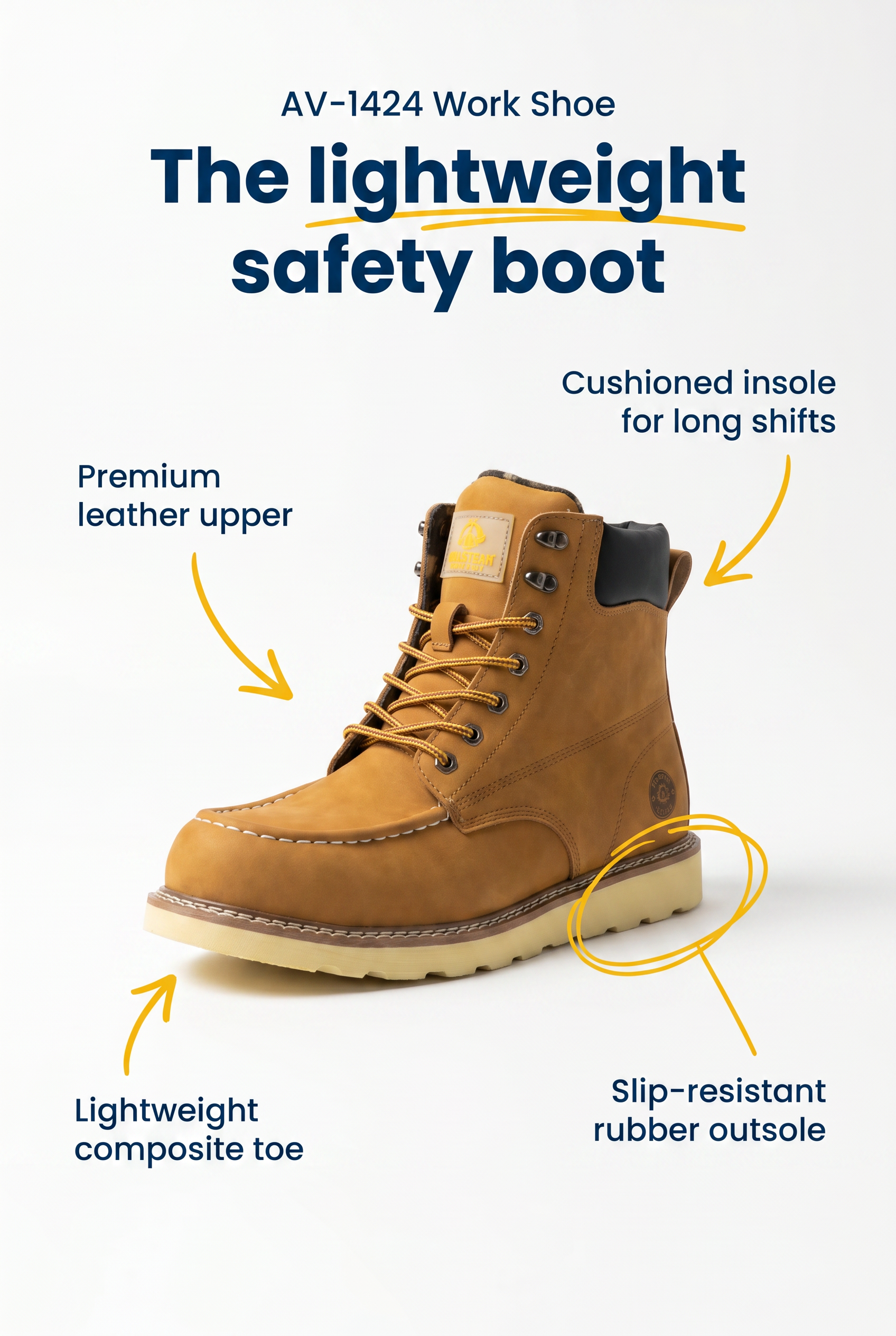
The wrong boot doesn't just mean sore feet by 3pm — it means slower work, more slips, and more time off if something goes wrong. Here's how to actually pick the right pair, rather than grabbing whatever's cheapest or already in stock.
Start With Your Environment
Before anything else, think about where you're actually standing all day:
- Dry, indoor — warehouse floors, workshops, stockrooms
- Wet or outdoor — building sites, yards, anywhere exposed to weather
- Sharp debris underfoot — general construction, groundwork, demolition
- Cold or refrigerated — cold storage, food processing
Your environment decides your minimum rating — see our S1 vs S2 vs S3 guide for how the EN ISO 20345 ratings map to each of these.
Match the Style to the Job
Once you know the rating you need, style is about how you actually work:
Runners
Lightweight and comfortable for long shifts on your feet, with a trainer-style fit. A good default for warehouse and light industrial work where you're moving constantly but the risk profile is lower.
Lace-Up Boots
More ankle support than a runner, adjustable fit through the laces — useful if you're on uneven ground or carrying weight regularly.
Chelsea / Dealer Boots
No laces, pull-on design. Faster to get on and off (useful if you're in and out of a vehicle all day), with elastic side panels for a secure fit.
Get the Fit Right
- If you wear thick work socks, consider going half a size up from your normal shoe size
- UK sizing is standard on most safety footwear — check the EU equivalent if you're used to buying in EU sizes
- New boots need a short break-in period — don't save your first wear for a full 10-hour shift
- A boot that's too loose is as much of a hazard as one that's too tight —ratletting around inside a heavy boot increases fatigue and blister risk
Don't Skip Slip Resistance
Look for an SR rating on the label — this means the sole has been tested for slip resistance on both ceramic tile and smooth steel. On sites with spills, wet floors, or metal walkways, this matters as much as the toecap rating.
Know When to Replace Them
Retire a pair when you see any of the following, regardless of how new they feel:
- Visible wear or smoothing on the sole tread
- Cracking or splitting on the upper, especially around the flex point
- Toecap showing through the upper material
- Stitching coming away at the seams
A worn boot loses its rated protection even if it still looks wearable from the top.
One More Thing
If your site has a specific compliance requirement — a named standard or rating your safety officer needs confirmed — check the product listing or get in touch with us directly before ordering, rather than assuming from the product name alone.


