


Cart
0
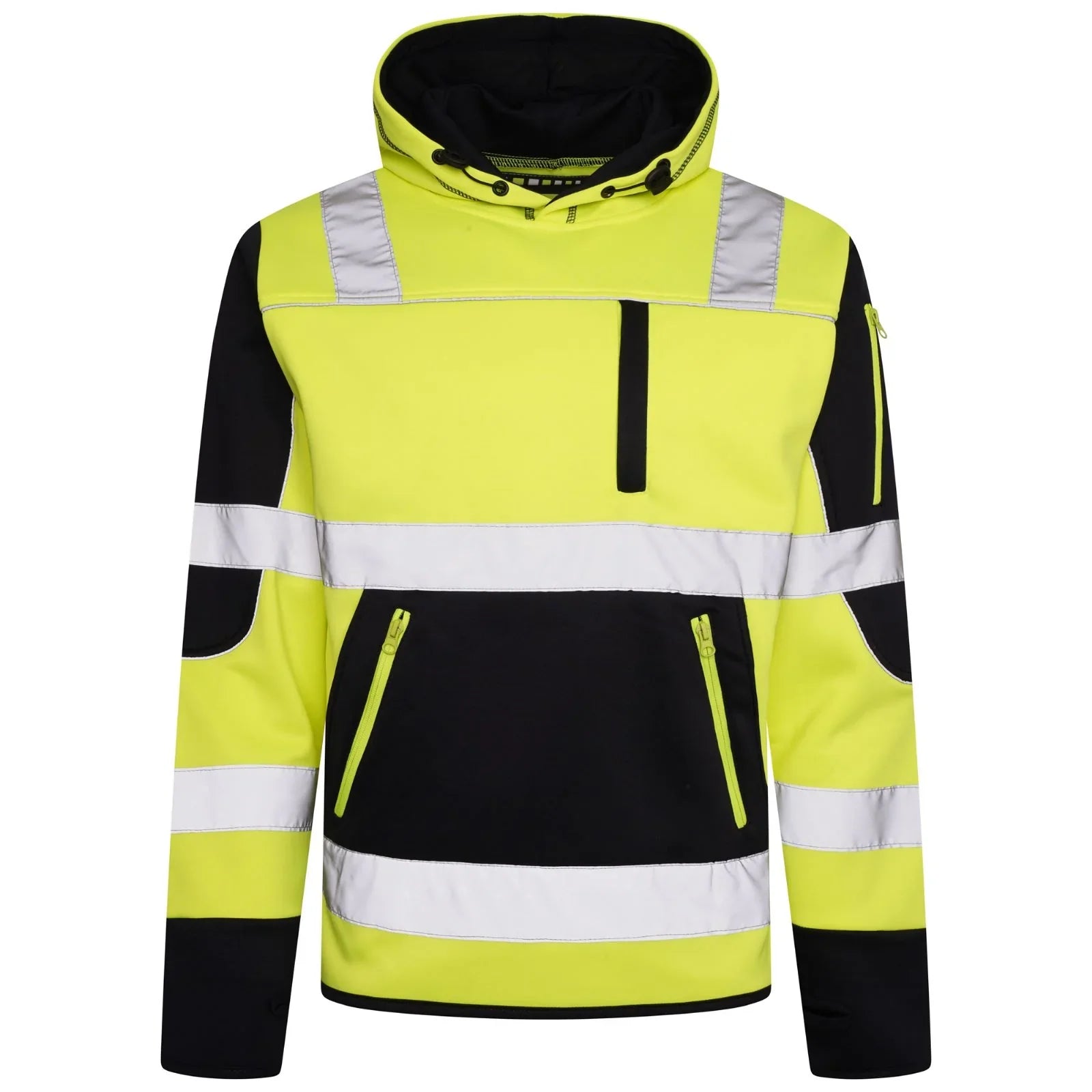
If you work on a construction site, near live traffic, or anywhere plant and vehicles are moving, you've almost certainly been handed a hi-vis vest and told to put it on. But not all hi-vis is equal — and not all of it is compliant.
Here's what EN ISO 20471 actually means, why it matters on Irish sites, and how to make sure the gear you're wearing (or issuing to your crew) meets the standard.
What Is EN ISO 20471?
EN ISO 20471 is the international safety standard for high-visibility clothing. It replaced the older EN 471 standard in 2013 and sets out exactly how much fluorescent material and reflective tape a garment must have — and how well those materials must perform — before it can be called compliant hi-vis.
Any hi-vis workwear that meets EN ISO 20471 will carry a CE mark and the EN ISO 20471 logo on the inner label, along with a class number (1, 2, or 3).
If a garment doesn't have that label, it's not certified — regardless of how bright it looks.
The 3 Classes of Hi-Vis
EN ISO 20471 splits hi-vis into three classes based on how much fluorescent and reflective material the garment provides. The higher the class, the more visible the wearer.
Class 1 — Lowest Visibility
The minimum level of protection. Class 1 garments have the least fluorescent material (minimum 0.14 m²) and the least reflective tape (minimum 0.10 m²). Suitable for low-risk environments only — for example, hi-vis trousers worn as part of a combined Class 3 outfit.
Class 1 on its own is rarely sufficient for Irish construction sites.
Class 2 — Intermediate Visibility
The legal minimum for most Irish construction sites. Class 2 requires at least 0.50 m² of fluorescent material and 0.13 m² of reflective tape. Sleeveless hi-vis vests typically fall here.
Class 2 is the baseline for groundwork, civil engineering, and general site work where workers are near slow-moving plant and vehicles.
Class 3 — Highest Visibility
Required for roadworks, live traffic environments, and increasingly common as a general site standard. Class 3 garments must cover the torso and include either full-length sleeves or trousers. Minimum 0.80 m² of fluorescent material and 0.20 m² of reflective tape.
Class 3 can be achieved by a single garment rated Class 3, or by combining two jointly certified items that together meet the Class 3 requirements. Look for the joint certification mark on the inner label.
Is Hi-Vis Legally Required in Ireland?
Yes. Under the Safety, Health and Welfare at Work Act 2005, enforced by the Health and Safety Authority (HSA), employers are required to carry out risk assessments and provide appropriate PPE — including hi-vis — wherever workers are exposed to traffic or moving plant.
In practice:
- Class 2 is the legal minimum on most Irish construction sites
- Class 3 is required for live roadworks and is increasingly the standard across larger sites
- Hi-vis must be worn by all workers, subcontractors, and site visitors when plant or vehicles are operating
Wearing hi-vis that doesn't meet EN ISO 20471 does not satisfy the legal requirement — even if it looks the part.
The 3 Components of a Compliant Garment
Every EN ISO 20471-certified garment has three elements working together:
1. Fluorescent background material
The bright yellow, orange, or red fabric that boosts visibility in daylight. Three colours are approved by the standard: fluorescent yellow, fluorescent orange-red, and fluorescent red.
2. Retroreflective strips
The silver tape that reflects light back towards its source at night or in poor light. Reflective strips must be placed on the sleeves and legs of applicable garments — a vest with tape only on the torso may not achieve the required class.
3. Contrast material
Darker panels — usually on the elbows, knees, or hem — that resist dirt build-up without reducing the garment's performance. Because staining on the fluorescent material reduces its effectiveness, contrast panels help extend the garment's compliant life.
What About Branded or Personalised Hi-Vis?
If you're adding a company logo to hi-vis, be careful. Any area of fluorescent or reflective material that's covered by a logo or print is excluded from the minimum area calculation. Cover too much and the garment may drop a class.
Where possible, place logos on the contrast panels. Alternatively, use reflective logo transfers that contribute to (rather than detract from) the reflective tape area.
How Long Does Hi-Vis Last?
Most hi-vis garments have a maximum compliant life of 25 wash cycles unless the label states otherwise. After that, the fluorescent material fades and the garment may no longer meet the standard — even if it still looks wearable.
A few rules of thumb:
- Rotate between at least two garments per worker to reduce wash frequency
- Replace hi-vis approximately every three months in heavy use
- Retire any garment with faded fluorescent material, damaged reflective tape, or tears — it's no longer compliant, regardless of wash count
A hi-vis vest that's seen better days isn't just shabby — it's a liability.
How to Check If Your Hi-Vis Is Compliant
Check the inner label for:
- EN ISO 20471 — the standard name
- Class 1, 2, or 3 — the performance class
- CE mark — confirms independent testing
If any of these are missing, the garment is not certified.
Staying Compliant on Site
A quick checklist for site managers and safety officers:
- All workers and visitors are issued Class 2 minimum (Class 3 for roadworks)
- Garments carry EN ISO 20471 labels with CE mark
- Faded, torn, or over-washed garments are replaced
- Branded garments have been checked — logos are on contrast panels only
- Replacement stock is in place before garments reach the end of their wash life
Looking for EN ISO 20471 certified hi-vis for your site or crew? Browse our hi-vis range →

